A home value estimate can give you an idea of what your property may be worth, but what determines the selling price of a home in Florida is ultimately what happens when that property meets the real market.
A seller can choose an asking price. An online valuation can produce an estimate. An appraisal can provide a separate opinion of value. But the final selling price is the result of an actual transaction between a buyer and seller.
That difference matters if you’re considering selling.
Before thinking about a listing price, you can check your Florida home value with Easy Realty and use the estimate as a starting point. Then it’s worth understanding the factors that can influence what happens when the property goes on the market.
Home Value, Asking Price and Selling Price Are Different
These three terms are related, but they don’t mean the same thing.
Home value is an assessment or estimate of what a property may be worth.
Asking price is the price at which a seller chooses to offer the property for sale.
Selling price is the price ultimately agreed upon in a completed transaction between the buyer and seller.
A seller can ask more or less than an estimated value. Buyers can respond favorably to that price, reject it or negotiate. The market ultimately provides information that no asking price or automated estimate can guarantee in advance.
The Asking Price Influences Buyer Response
Pricing is one of the first strategic decisions involved in bringing a property to market.
Buyers aren’t normally evaluating your home in isolation. They’re comparing it with other properties available within the same general price range and market.
If the asking price places a property alongside homes that buyers perceive as substantially more attractive, the property can face difficult competition.
If a property appears compelling relative to the alternatives, buyer response may be very different.
That doesn’t mean the lowest asking price is automatically the right strategy. It means pricing affects the competitive position in which the property enters the market.
Recent Comparable Sales Help Establish Context
Recent sales of genuinely comparable properties provide useful evidence of what buyers have recently been willing to pay.
But a comparable sale needs to be genuinely comparable.
Factors can include:
- Location
- Property type
- Living area and lot size
- Bedrooms and bathrooms
- Age and condition
- Renovations and improvements
- Views, pools and other features
- Community characteristics
- Timing of the sale
A property that happens to be nearby isn’t necessarily the best comparison.
Understanding the different influences on value can help explain why two homes that look similar at first glance may sell for different prices. We cover those factors more closely in What Affects Your Home Value in Florida?.
Current Competition Can Affect the Selling Price
Sold properties tell you what happened previously. Active listings show buyers’ current alternatives.
This is particularly important when preparing to sell.
If several similar properties are already available, buyers may have considerable choice. They can compare asking prices, condition, features, location and overall presentation before deciding which homes deserve their attention.
A market with very little comparable inventory creates a different competitive environment.
The number and quality of competing properties can also change while your home is on the market. New listings appear, existing properties reduce their prices, homes go under contract and others sell.
That’s why pricing a property isn’t simply a matter of looking at historical sales and choosing a number.
Location Matters
Florida is not one real estate market.
Conditions can vary between regions, cities, neighborhoods and individual communities. Even properties located relatively close together may compete differently because of their surroundings, community characteristics, views, amenities or proximity to things buyers value.
The type of property matters too.
Condos may face different supply and demand from nearby single-family homes. Luxury properties can behave differently from more moderately priced homes. Vacation and investment properties may attract buyers evaluating a different set of considerations.
A statewide trend can provide context, but it does not establish the selling price of an individual Florida property.
Condition Can Influence What Buyers Are Willing to Pay
Two properties can have similar recorded specifications and present very differently to buyers.
One may have been carefully maintained with updated major systems and modern interiors. Another may require significant work after closing.
Buyers can take those differences into account when deciding whether to make an offer and how much they’re prepared to pay.
Condition can include visible cosmetic items, but larger components can also become relevant. Roofing, HVAC equipment, windows, plumbing, electrical systems and other aspects of a property may influence how buyers evaluate the complete ownership proposition.
Do Renovations Increase the Selling Price?
Renovations can influence a property’s appeal and competitive position, but the amount spent on an improvement does not automatically get added to the eventual selling price.
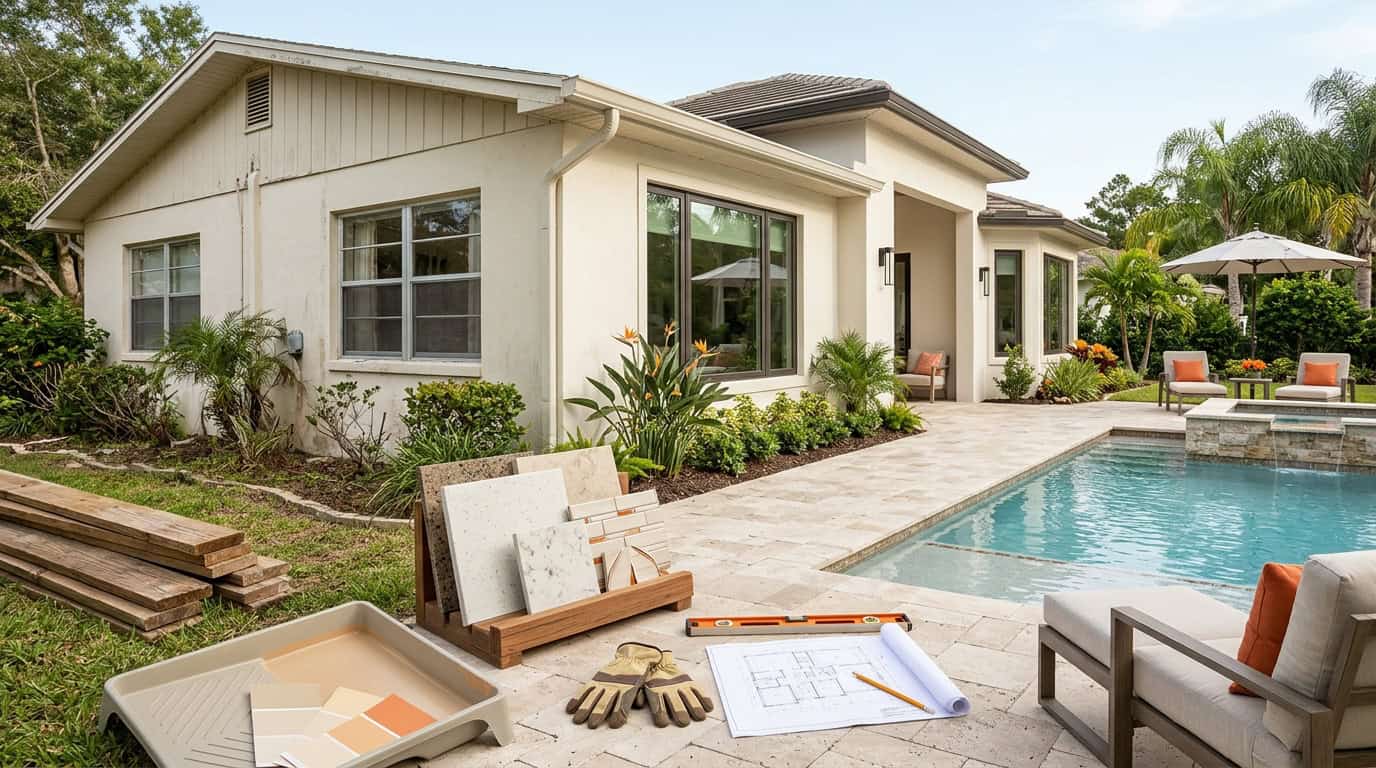
A renovated kitchen, updated bathrooms, newer roof, improved outdoor living area or pool may affect the way buyers compare a home with competing properties.
The impact depends on the improvement, the property and the local market.
If you’re considering improvements partly because you expect them to increase value, read Do Home Improvements Increase Property Value in Florida? before assuming renovation cost and added value are the same thing.
Unique Property Features Can Affect Buyer Demand
Some Florida homes have characteristics that make direct comparisons difficult.
Examples might include:
- Waterfront access
- Water or golf views
- Swimming pools
- Large or distinctive lots
- Extensive outdoor living areas
- Additional garage space
- Community amenities
- Unusual floor plans or design features
Those features don’t come with universal price adjustments.
Their importance is determined partly by what buyers in that particular market value and what competing properties offer.
Buyer Demand Matters
A selling price requires a buyer as well as a seller.
The number of buyers actively seeking a particular kind of property and the alternatives available to those buyers influence the environment in which a home is marketed.
When suitable inventory is limited relative to buyer demand, sellers may encounter a different competitive environment from a market in which buyers have many similar properties to choose from.
Demand can also vary between price ranges and property types, which is another reason broad Florida market statements should not be applied mechanically to an individual home.
Market Exposure Can Reveal How Buyers See the Price
Once a property is offered for sale, buyer behavior begins producing additional information.
Buyers may view the listing online, schedule showings, return for another look, ask questions or make offers. Alternatively, a property may receive less attention than expected.
None of those signals should be interpreted in isolation, but actual market exposure can provide information that wasn’t available before the home was listed.
That feedback is one reason a selling strategy may need to respond to real market conditions rather than remain fixed around an initial assumption of value.
Negotiation Can Change the Final Price
Even after a buyer decides to make an offer, the asking price doesn’t automatically become the selling price.
The buyer and seller may negotiate price and other terms before reaching an agreement.
Every transaction has its own circumstances, so the final result cannot be predicted solely from the original asking price or an earlier online estimate.
The eventual selling price reflects the agreement reached in that particular transaction.
Can an Online Home Value Estimate Predict the Selling Price?
An online estimate can be useful for establishing an initial reference point, but it cannot guarantee the price at which a future transaction will close.
The estimate is produced before the complete selling process has happened.
It cannot know in advance exactly which competing homes will be available, how buyers will respond to your property, what offers may be made or how a future negotiation might unfold.
If you’re deciding how much confidence to place in an automated valuation, read How Accurate Are Online Home Value Estimates in Florida?.
Does an Appraisal Determine the Selling Price?
An appraisal and a selling price are also different concepts.
An appraisal is a separate valuation performed by an appraiser. A selling price is the price agreed upon through an actual transaction.
An appraisal may play an important role in a transaction or lending process, but the terms should not be treated as interchangeable.
Our guide to Home Appraisal vs. Home Value Estimate explains the distinction between the different ways homeowners may encounter property valuations.
So How Should You Decide What Your Florida Home Is Worth?
Think of valuation as a process rather than a hunt for one perfect number.
You can begin with an online estimate. Then look at recent comparable sales, competing homes currently on the market, your property’s condition and improvements, distinctive features and local supply and demand.
That broader picture becomes especially important if your real question isn’t simply “What is my home worth?” but “What could my home sell for?”
Our complete guide to how to find out what your home is worth in Florida explains the different ways to approach that question.
Start With Your Florida Home Value
If you’re considering selling, understanding your property’s approximate value is a logical first step.
From there, the focus can shift toward what is happening in the local market, which homes buyers can currently choose from and how your property compares.
The eventual selling price will be determined through an actual transaction. But understanding the home’s estimated value and competitive position gives you a much better place to begin.
Find out what your Florida home may be worth with Easy Realty’s instant home value tool.